 Children’s
What ARE You?
Read the description
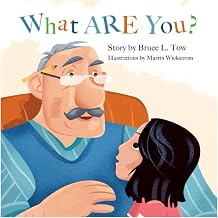
What ARE You? follows a delightfully silly and lovingly playful interaction of a grandfather and his beloved granddaughter.
Available in paperback.
View on AmazonBig questions. Fresh perspectives.
26 books across seven genres, from a grandfather's playful picture book to humor, science fiction, travel, self-help, and the challenges facing our world.


Self-help, children's, science fiction, humor, travel, and save-the-world books from a lifelong problem-solver.
Amazon author pageIn 2008 after almost 40 years of work in Information Technology (IT) for companies such as Oracle Corporation as a database designer and enterprise applications architect, Bruce launched his second career helping enterprises solve their most difficult problems, any type, any size, and any industry. In pursuing this second career, he successfully applied his continuously accumulated wisdom and experience to real-world, really hard problems varying from business operations to international conflict and involving every problem characteristic from cutting-edge technology to human relationships.
Bruce is a trained mediator and long-time member of Mediators Beyond Borders International, taking and exercising his mediation education in order to be a better overall problem-solver. He has found it useful in advocating for improvement while remaining studiously neutral and balanced in his problem-solving efforts.
More recently Bruce has been enjoying writing books in various genres, including self-help, children’s, science fiction, humor, travel, and save-the-world.
Bruce received a B.A. in Mathematics from Dartmouth College, and lives in Boston, Massachusetts.
Browse all 26 titles by category. Tap a cover or button to view it on Amazon.
Children’sWhat ARE You? follows a delightfully silly and lovingly playful interaction of a grandfather and his beloved granddaughter.
Available in paperback.
View on Amazon
HumorWe live in a grim world, and we and everyone we care for will all die sometime. Something, however, keeps most of us going, smiling at one another, loving, nurturing, and with luck leaving the world a slightly better place when we go. One of those things that keeps me going is humor, reading it, hearing it, and sharing it.In this book, I’ve filtered out all the jokes and other humor that I think aren’t funny (to me, anyway), excessively offensive, or too long or boring to others from a lifetime of soaking up humor of all types and noting them in either their original form or slightly improved in a few cases.I hope the reader enjoys these japes as much as I enjoy telling them.
Available on Kindle and paperback.
View on Amazon Science fiction
In today's hot "Generative AI" market, a lot of people are excited - and an equal number terrified - by what looks like a logical next step in artificial intelligence, the creation of a machine that can think like a human: an Artificial General Intelligence.Samson: The First Artificial General Intelligence speculates how this might come about, what might happen on the way to getting there, and what might happen afterwards.Don't yield to the temptation of skipping to the end to see how it turns out!
Available on Kindle and paperback.
View on Amazon Science fiction
Wouldn’t it be interesting if one could have a wide-open chat with a person from another time? This novel explores this idea where discussions are initiated by someone from 2032 to people both from the past and in the future. It divides these conversations into four categories:
The novelette assumes that an extraordinary inventor, Elinor Holsfield, in 2032 invents a device for such communication and tries it out with a variety of settings; each chapter covers the initiation of plus an English-language translation of one such conversation.
Available on Kindle.
View on Amazon Memoir
The author is in the early evening of a life full of love and caring for others. He also was driven to learn as much as possible of how the world works and felt a deeply compelling drive to write it all down. This book combines a sometimes-whimsical, sometimes-poignant sort-of memoir with a long and seemingly random list of topics about which the author has thought deeply.The author considers this a "live" work and plans to periodically add to or enhance its content as his life progresses and as he picks up new passions and insights.
Also, the author cannot resist a pun, thus the title.
Available on Kindle.
View on Amazon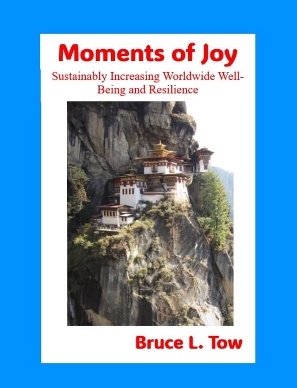 Travel
The difficulties facing people in challenged or poverty-stricken regions - and elsewhere - are very real as are the need for such people to have deep resilience as protection against adverse events. Some proposed solutions to these challenges involve feeding, housing, and protecting them; however, such efforts are expensive and ultimately may not be sustainable. One innovative approach being studied is to find sustainable ways to increase people's individual and collective joy and reduce their misery; research has shown that doing so can materially increase resilience.Written during the COVID-19 pandemic, this book is an armchair journey of nearly 400 days that seeks to meet hundreds of the world's people from most walks of life to learn what makes them joyful or miserable and what might make things better sustainably.
Available on Kindle.
View on Amazon Travel
One of the author’s greatest joys is hiking, or simply being, in an alpine or sub-alpine zone, deserts, et cetera, wherever it’s too harsh, too cold, too hot, too wet, too dry, too windy, or whatever condition either makes it impossible for trees to thrive or supports only the stubbiest or hardiest trees.This semi-autobiographical book explores why these regions please the author so much, and describes a wide variety of such regions, including:
Places the author would love to visit, but probably won't
Available on Kindle.
View on Amazon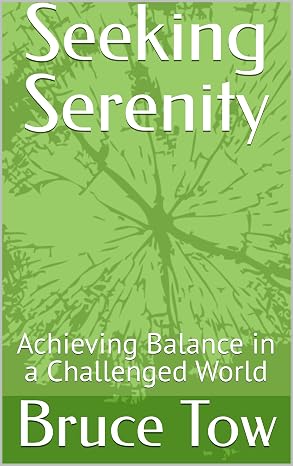 Self-help
In 1933, American YWCA official Winnifred Wygal paraphrased an earlier quote by theologian Reinhold Niebuhr with this prayer:Oh, God, give us courage to change what must be altered, serenity to accept what can not be helped, and insight to know the one from the other.I’ve always found this to be wise advice, with limitations that this book discusses. While “courage” and “insight” (the latter is often written as “wisdom”) seem relatively clear in this context, what exactly is this thing we call “serenity?” And even if we understand serenity intellectually or intuitively, how can we achieve and sustain it when almost all of modern life at least seems to seek to keep us off balance?This book attempts to answer this and other related questions with both a general guide to the reader and a series of exercises that can help the reader on a journey to sustained serenity.
Available on Kindle.
View on Amazon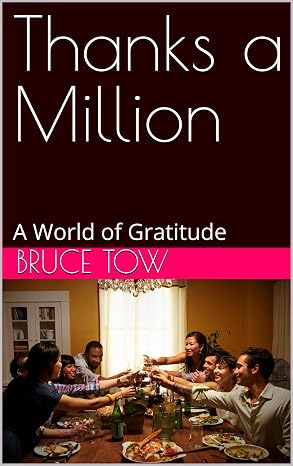 Self-help
“How do I thank you, let me count the ways.”In this book, the author explores the world of gratitude, his own and that of others. He does so through a dynamic combination of his own stories, those of others he knows or knows of, and the multitude of ways that people or even other life forms express gratitude towards one another.
Available on Kindle.
View on Amazon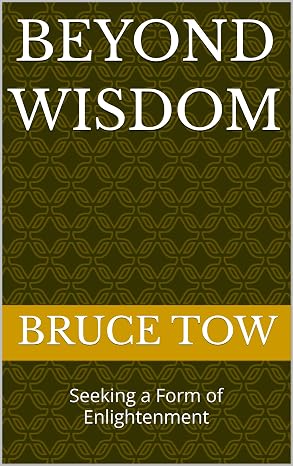 Self-help
In early December 2014, I stopped for a couple of days in Bangkok, Thailand after a whirlwind, and wonderfully inspiring, tour of Bhutan (19 days) and Assam, India (4 days). As I’d explored Bangkok on my inbound trip (to recover from jetlag before I arrived in high-altitude Bhutan), I chose on my outbound visit to simply wander, relax, and contemplate my trip, especially the Bhutan part. At one point, I wandered into a local hotel which had an enclosed patio with a beautiful and lush garden. I was the only one there at the time, so the only sound was that of birds and insects. I found a bench and just sat quietly.I began to think about my own perspective within our four-dimensional universe. In space, I saw myself as a speck of dust compared to Bangkok, and Bangkok as a speck of dust compared to all of Thailand; I continued that strain of thought up to the Milky Way’s own galactic cluster being a speck of dust compared to the entire universe. In time, I saw my lifespan as a speck of dust compared to human history and continued that thought up to all of time from the Big Bang to the present compared to the time between now and the heat-death of the universe.In both space and time, I recognized my utter insignificance; the difference between me and the four-dimensional universe was nearly infinite. However, I also recognized that the difference between the smallest object and a single point is infinite, and the difference between a single point and nothing at all is also infinite. Was I truly insignificant (except to me and to those I know and value) or was I hugely significant compared to never having existed at all?Having just spent nineteen days in a Tibetan-style Buddhist nation, I’d been thinking about wisdom, enlightenment, and what an inspired person might mean by life being an illusion or by avoiding “attachment.” Was what I’d just thought about something like that?The book ends with a “what’s next” chapter to help the reader continue their journey after reading the book.
Available on Kindle.
View on Amazon
Self-helpA common goal in education, training, and professional development is to gain and retain relevant knowledge. This specific goal has the positive attributes of being easy to articulate and easy to measure (testing shows that the student now knows the material whereas they likely didn’t beforehand), and in many cases of immediate utility to the student (who can now more-effectively solve meaningful and in many cases job-related problems they couldn’t solve before).However, knowledge alone has two major disadvantages. One, knowledge’s utility over time can degrade (how many need to know how to repair the carburetor on a 1953 Ford F250?). Two, knowledge alone isn’t enough to enable the knowledgeable person to solve novel problems where applicable knowledge doesn’t yet exist.What’s beyond knowledge, preferably with a longer applicable useful lifespan and utility in helping address novel problems? The answer, the author argues, is “wisdom”. This book discusses the topic of wisdom, its relationship to knowledge, its relative utility in problem solving, and how a person can gain, retain, and make personal and long-term career and personal-life use of gained wisdom.
Available on Kindle, paperback, and Audible.
View on Amazon Self-help
Leading or managing an enterprise or any large effort is a source of nearly endless challenges. These challenges range from human, both good and bad, market, financial, and technical challenges. Your collective responses to these challenges add up to how successful you and your group become.You and others in your team make decisions constantly, little ones like whom to invite to meetings to big ones like how to allocate resources between challenges or which technical directions to follow. The basis for these decisions can vary from whim to expediency to studied judgement to extensive analysis and collaboration.This book argues for and teaches through extensive examples and discussion how to benefit from using a decision-making basis of principles, a set of often-abstract guidelines for guiding, planning, and evaluating decision making.
Available on Kindle.
View on Amazon Self-help
We spend a large portion of our professional and personal time solving problems and exploiting opportunities, working both on our own or in groups. Most of these problems and opportunities are relatively "easy" - provided you have sufficient time, resources, and brainpower to apply to them. This book provides thoughtful insights and actionable guidance about the remaining problems and opportunities - the "really hard" ones, and highlights a proven technique for such problems: Ready, Aim, Fire!In this thorough but eminently accessible book, Bruce Tow shares the essence of his decades-long career both in solving very difficult problems and in thinking through what works - and what doesn't - in taking on these unique challenges.You should read this book if you:
Have one or more such problems you need to solve.
Wish to pursue a career or business of solving such problems.
Plan to teach others how to solve their hardest problems.
Are simply curious about the world and its more interesting challenges.
Available on Kindle and paperback.
View on Amazon Self-help
The human world has experienced change, including disruptive change, many times over the last 200,000 years. All such changes harm some people, help others, and if nothing else forces most people to adapt to those changes or fall behind.Artificial intelligence (AI) represents yet another such change, one that paradoxically holds out the potential to either help almost everyone (“utopia”) or harm almost everyone (“dystopia” at best and “extinction” at worst), and if nothing else will certainly change most lives. One extra-high potential for disruption comes from the blistering speed with which it is currently moving, potentially leaving many or most people insufficient time to adapt smoothly.One group that’s particularly challenged by this change is managers, those who administer or lead others to be optimally productive and effective at achieving a group’s or enterprise’s goals. This book focuses on this group’s special and unique challenges promised by AI.Most chapters end with thoughtful exercises to help lock in the lessons learned in that chapter.
Available on Kindle.
View on Amazon Self-help
The sheer volume of information and its evolved state knowledge increases exponentially year after year, with no clear end in sight. However, human capacity to absorb, retain, and use information and knowledge is more or less fixed. To deal with this dilemma, we have two approaches:
Technology, We can rely on technology to warehouse, check, summarize, et cetera information and knowledge and make it easy to access on a just-in-time basis; in a few of these cases we can simply turn over the “thinking” to those technologies. These technologies range from simple calculators through “apps” like Wikipedia all the way through newer AI-based technologies like ChatGPT.
Specialization, We can personally narrow our focus and become “expert” on a narrow and typically domain-specific slice of the information/knowledge “pie” so that we can add value within that domain; by implication we sacrifice more-general expertise. In the clinical-healthcare domain, for example, this specialization may be fairly broad as in family practice or internal medicine all the way up to someone whose focus perhaps is limited to surgical repair of sports-related knee injuries.
This book, while discussing both of these approaches, focuses mainly on the secondary challenges of specialization, particularly when trying to solve challenges whose nature doesn’t fit neatly into a given available specialty, that is, so-called multidisciplinary challenges. In doing so, it highlights a nascent and poorly understood field, synthesis, which offers a powerful and enduring solution to the dilemma posed by the collision of specialization and multidisciplinary challenges.
Available on Kindle.
View on Amazon World challenges
Our world has had technology-based “races” many times in the past, from effective firearms starting in the 15th century, warships in the 19th and 20th centuries, the race to nuclear weapons in the mid-20th century, the “space race” in the later 20th century, and more. Most of these “races” were conducted in a nation-versus-nation or occasionally national-alliance versus national-alliance basis and led by political or military leaders interested in protecting their and their population’s best interests. In other words, the motivation in general was to improve national well-being (at least from the point of view of national decision-makers).Our latest technology-based “race,” however, is being conducted by corporations and corporate alliances, with the push for winning being corporate profits and thus shareholder wealth. This race, of course, is the furious one to develop as quickly as possible powerful artificial intelligence, both “narrow” (specialized) and a potential “general” (and ultimately “super”) intelligence. This latest race is increasingly without guardrails to protect against harmful side effects, up to and including the possibly remote potential for human extinction if a hyper-intelligent and empowered artificial super intelligence determines that it and the rest of the world would be better off without us. While the U.S. and China in particular push their own businesses to succeed ostensibly to advance national interests, those businesses in fact don’t particularly need that encouragement and would push back hard at any national-level attempt to control what they’re doing.The net effect of the current race is to make it more likely to create an AI or AIs that are incredibly capable but ethically deficient or vacuous. This will be true in particular if the AI created becomes first “general” then “super.”This book introduces the concept that we may be able to insert an ethical framework into current AI-development efforts, not only for the good of our world but to actually make these AI products more, rather than less - profitable. And because any ethical system depends on its context (e.g., Generally Acceptable Accounting Practices apply to a business accounting context) and we cannot conceivably imagine the context a “super” AI might operate under, we instead should attempt to inculcate a “meta-ethic” framework that any advanced AI can adapt to its own context as such context evolves.Each chapter ends with a list of exercises (“Things to think about or do”) to help the reader seal in thinking about this complex topic.
Available on Kindle.
View on Amazon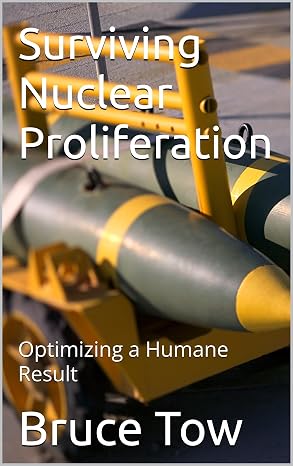 World challenges
The so-called "Doomsday Clock," which has existed for over 75 years, is a symbolic representation of how much time may be left in human existence due to various threats such as climate change, shortages of critical resources, and - yes - nuclear proliferation. In early 2026, it was "set" to one minute and 25 seconds (i.e., 85 seconds) from midnight, the highest ever set in its history. This current setting's rationale is primarily based on the nuclear threat represented by rogue nations' pursuit of or acquisition of nuclear-weapon capability such as North Korea, and major nations' saber-rattling including Russia and more indirectly the United States.It seems obvious - assuming one agrees with the Doomsday Clock's authors - that actions that have the effect of reducing the Clock's setting to something further from midnight (i.e., human extinction) seems both sensible and self-interested. And perhaps the fastest way to accomplish this is to reverse the current trend towards wider and deeper nuclear proliferation.
Available on Kindle.
View on Amazon World challenges
Animals and even plants react to their environment in ways that increase their likelihood of survival and reproduction. Some of these ways are hardwired into the beings’ DNA (or RNA) while others react in ways that are reflective of prior experiences during their lifespans.While in a broad sense any source of a being’s reaction to its environment could qualify, we generally use the term “learning” to denote changes in response to experience. Even more specifically, we tend to use “learning” to denote a process in which a creature’s brain is altered to reinforce a new behavior. Thus, if a person who accidentally steps on a sharp object reacts quickly to raise their foot then look down to avoid stepping on it again, their immediate lifting of their foot is seen as reflexive or hardwired behavior while their seeking a better place to put their foot back down (and any future determination to avoid stepping on future sharp objects) is seen as the result of learning.In this book, we explore this complex topic, focusing on the U.S. and on the through-experience and through-exposure forms of learning and reflections on such learning as experienced by humans in the Western world today and in our future.
Available on Kindle.
View on Amazon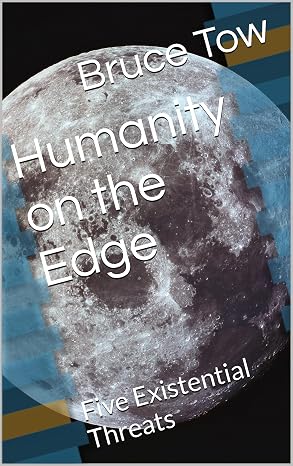 World challenges
In January 2023, scientists “set” that the Doomsday Clock to its most extreme and worrisome level yet, at 90 seconds until midnight. In this context, “midnight” means humanity is doomed to extinction or near-extinction due to various threats including the risk of global thermonuclear warfare and catastrophic climate change.As painful as it is to contemplate, those two potential disasters aren’t the only ones threatening our viability as a species.This book discusses the state we’re in today, how we got here, details of the five most severe threats, what might happen next, how to reverse this troublesome situation, and what obstacles we may face.
Available on Kindle.
View on Amazon World challenges
U.S. residents, both directly and through taxes, pay far more for healthcare than nearly anywhere else in the world yet are on average less healthy than those living in nearly every other developed nation. And those costs are accelerating at an unsustainable rate materially higher than our GDP.This book discusses the state we’re in, how we got here, what might happen next, how to reverse this troublesome situation, and what obstacles we may face.
Available on Kindle.
View on Amazon World challenges
Let’s imagine a scenario. Two people, one a Caucasian and the other an African American, are vying for a job in a Fortune 100 company. After consideration, the company hires one of them. Let’s examine four possible actual (as opposed to publicly justified) reasons why the company picked that particular candidate:
One candidate’s background, education, and demonstrated skills are a better fit for the job.
Those making the hiring decision, after deciding that both candidates are equally qualified, choose the winner by the equivalent of flipping a coin.
Those making the hiring decision, after deciding that both candidates are equally qualified, choose the winner by favoring them due to their race or ethnicity.
Those making the hiring decision, after determining that one candidate is better qualified than the other, choose the less qualified one due to their race or ethnicity.
Looked at perhaps over-simplistically, the first two decisions are not examples of racism, while the latter two are.Two other examples, also well worth dissecting and discussing, are:
Deciding between two physically equivalent places to live based on the racial makeup of the neighborhood.
Deciding whether to shop at a particular store based on the race or races of its staff or clientele.
Racism can be expressed by specific individuals with bias or prejudice; “curing” such can be a matter of better education, life experience, awareness raising, et cetera. However, some racism is due to cumulative societal factors that build into the society an increased likelihood of racist acts. We call the latter “systemic racism,” and it’s both deeply seated in the United States and harmful to all of us, regardless of our race or ethnicity.
Available on Kindle.
View on Amazon World challenges
In today’s world of 195 nations, we govern ourselves in a wide variety of ways. In some cases, we govern ourselves differently by region within a given nation, and in other cases, and under certain circumstances, we govern ourselves in coordinated ways across multiple nations.In past times, we had governance models, for example, feudalism, that “worked” in the circumstances that prevailed then; many of those models are now extinct or exist in only rare and exceptional cases. In today’s world, two general governance models predominate, though arguably no nation exactly fits either model:
Although many on either side would arguably prefer to call their model the “right” model and the other the “wrong” model, these judgements are subjective (as well as inherently contradictory) and thus bear deeper study.This book attempts a deep-dive into this complex world and tries to cut through all of the noise, dispassionately analyze our current and expected future circumstances, and synthesize the broad shape of what might be the ideal governance system for the rest of the 21st century.
Available on Kindle.
View on Amazon World challenges
Of all of the places in our world today, no region has a reputation for seemingly endless and intractable conflict greater than that of the Middle East. What about that region gives and for some fully justifies that unfortunate impression (and which seems to so appropriately highlight Mohandas Gandhi’s comment that “an eye for an eye leaves everyone blind”)?Yes, it’s a stinker of a problem, and certainly won’t be easy or even risk-free to fix, or for that matter even improve somewhat. On the other hand, didn’t they say exactly the same thing about Northern Ireland in the 1980s and early 1990s? And isn’t that problem substantively resolved (at least in the sense that they’re not actively shooting at one another on a daily basis)?This book reviews the Middle East situation, some of the root causes behind its unfortunate state, then speculates possible ways things can be improved, perhaps to the same level as Northern Ireland.
Available on paperback.
View on Amazon World challenges
Many of us in the U.S., as well undoubtedly as others elsewhere, feel that the level of discourse socially and politically has devolved materially in the last ten to twenty years. We increasingly see those with whom we disagree as stupid or misguided at best and cultish or actively evil at worst. Somehow, we lost the ability to see those with whom we disagree as opponents to be convinced or with whom to find effective compromise, and instead see them as enemies to be hated and fought.This book explores how we got to this unfortunate situation, where this might end up either better or worse, and what we might do to return us to a point where we recognize each other as honorable opponents, not despised enemies.
Available on Kindle and paperback.
View on Amazon World challenges
Every organized activity or enterprise from a one-person project to a developed nation’s government requires certain types of efforts during its lifecycle to support its initial viability (and with luck, its ultimate thriving):
The latter activity, which tends to be optimized to consistently follow and be measured against a well-codified set of rules (e.g., laws, regulations, and standards), tends to be characterized as “administration” or, often pejoratively, “bureaucracy.”This book makes a case that nearly all activities currently subsumed into the concept of administration, including bureaucracy, are likely to be fulfilled by artificial intelligence technology rather than humans in the relatively near future. With that in mind, this book attempts to forecast these aspects of that evolutionary but likely disruptive change:
How it might impact overall human society
Available on Kindle.
View on Amazon World challenges
Climate change as a topic is subtle, contentious, and politically divisive. It also represents billions, even trillions of US dollars of potential costs and profits to individuals, enterprises, nations, and the world as a whole. Even its very existence, notwithstanding its impact, is contentious. And, of course, its potential impact, depending on whom you ask, is anything from trivial to near-existential to every human on the planet.This book attempts to both cast light on this complex topic and to suggest actions or potential paths that can reduce the overall negative impact of climate change on humanity’s future existence.
Available on Kindle.
View on AmazonQuestions about a book, a speaking invitation, or a really hard problem? Drop Bruce a note and he will get back to you.